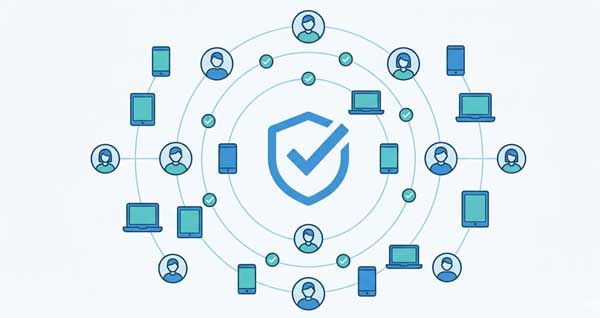
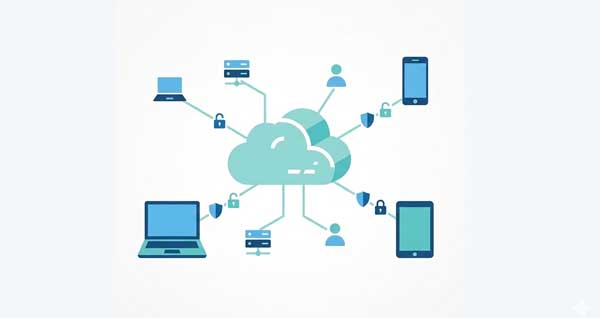
Mutual TLS (mTLS) in a ZTNA service provides superior security through two-way authentication: both client and server must prove their identities with certificates before access is granted, reducing risks of impersonation and unauthorized access. Using standard TLS instead of mutual-TLS 1.3 leaves organizations open to a number of common attacks.
Core Benefits of mutual TLS
- Stronger Authentication
mTLS ensures both users and enterprise resources authenticate each other, so only verified devices and users are granted access—helping thwart phishing, credential theft, and impersonation attacks. - Prevention of Unauthorized Access
Because every connection in ZTNA is verified with certificates, attackers cannot easily spoof identities or hijack sessions, resulting in much less chance for breach or lateral movement within the network. - Encrypted Data Transmission
All traffic between the user and applications is encrypted, meaning sensitive information remains protected against interception during transit, supporting compliance and privacy requirements.
Operational Advantages of mutual TLS
- Zero Trust by Default
mTLS supports the zero trust security principle: never trust, always verify—even for internal assets. This sharply decreases the attack surface and enables organizations to grant fine-grained access to only those resources needed. - Granular Access Control
ZTNA with mTLS enables application-level micro-segmentation and dynamic policy enforcement, so access permissions are tightly controlled and monitored in real time.
Why mTLS 1.3 is not enough – Certificate Rotation and Defense
While supporting certificate rotation is an important feature in advanced ZTNA platforms, simply having the ability to rotate certificates is not enough. Manual rotation schedules can easily be missed or forgotten, leaving infrastructure exposed and undermining security. For true resilience, organizations must enable automated certificate rotation workflows across the entire infrastructure. This approach eliminates risks of overlooked or delayed manual rotations, ensuring that all certificates are updated consistently and proactively at scale, and providing continuous defense against credential compromise and “low and slow” attacks.
End User and IT Benefits
- Reduced Attack Surface
Users can access only vetted, approved resources; corporate networks remain hidden, and threats like ransomware have fewer opportunities for intrusion. - Simplified Management
IT teams gain easier visibility and control, faster deployment without legacy appliances, and improved user experience compared to traditional VPNs.
| Feature | TLS 1.2 | TLS 1.3 | mTLS 1.3 | mTLS 1.3 + rotating Certificates + Secure Certificate Infrastructure |
|---|---|---|---|---|
| Handshake Speed | 2 round trips (slower, more latency) | 1 round trip (faster, less latency) | 1 round trip (fast) | 1 round trip (fast) |
| Cipher Suites | Many, some weak/outdated (RC4, SHA-1) | Only strong, modern suites (AES-GCM/ChaCha20) | Same as TLS 1.3 | Same as TLS 1.3 |
| Forward Secrecy | Optional | Mandatory | Mandatory | Mandatory |
| Authentication | Server only (client optional) | Server only (client optional) | Server and client required (mutual) | Server and client required (mutual) |
| Vulnerability Exposure | Susceptible to FREAK, Logjam, CRIME, POODLE, Lucky 13 | Removes legacy protocol attacks | Further reduced ( validated client credentials , no replay) | Further reduced ( vastly reduced credential abuse, no replay) |
| Session Encryption | May expose handshake packets | All handshake messages encrypted | All messages and identities encrypted | All messages and identities encrypted |
| Key Exchange | RSA, DHE, ECDHE supported | Only ECDHE supported | Only ECDHE supported | Only ECDHE supported |
| Zero Trust Readiness | Limited | Improved foundation | Full zero trust (identity verified each session) | Fine Grained Trust Validation with rapid (8hr) trust rotation |
| Device Trust | Not enforced | Not enforced | Device must have valid cert; mitigates rogue devices | Additional – secure cert infrastructure (in memory, encrypted certificates to prevent cert compromise) |
| Performance | Slower handshake, greater overhead | Faster handshake, less overhead | Fast handshake, | Fast Handshake |
| Certificate management | 1- 10 years server side only manual process | 1- 10 years server side only manual process | 1- 10 years server and client, manual process | Dynamically Managed – down to minutes |
| Compliance Support | Weaker; legacy system risks | Better; meets stronger standards | Excellent; supports audit, HIPAA, GDPR, SOX | Future proofed for compliance requirements around rotation, certificate security |
In summary, mTLS in ZTNA enhances security, trust, and manageability for organizations by ensuring every user and device is continuously verified, all transmissions are encrypted, and access is strictly controlled and monitored. As a bonus, management is simplified so you get fast deployment, centralized controls, and better visibility.