The Bigger Question Is: Why Is So Much Access Still Exposed?
Palo Alto Networks has disclosed that attackers are exploiting CVE-2026-0257, an authentication bypass vulnerability in PAN-OS GlobalProtect portal and gateway configurations. According to Palo Alto Networks, the flaw can allow an attacker to bypass security restrictions and establish an unauthorized VPN connection when specific GlobalProtect authentication overrides cookie configurations. Palo Alto rates the issue High with “Highest” urgency and says limited exploit attempts have been observed against unpatched systems without mitigations.
CISA has added CVE-2026-0257 to its Known Exploited Vulnerabilities catalog, a strong signal that security teams should treat this as more than routine patch management. Cybersecurity Dive reports that CISA warned this type of vulnerability is a frequent attack vector for malicious actors and poses significant risk to federal networks. (Cybersecurity Dive)
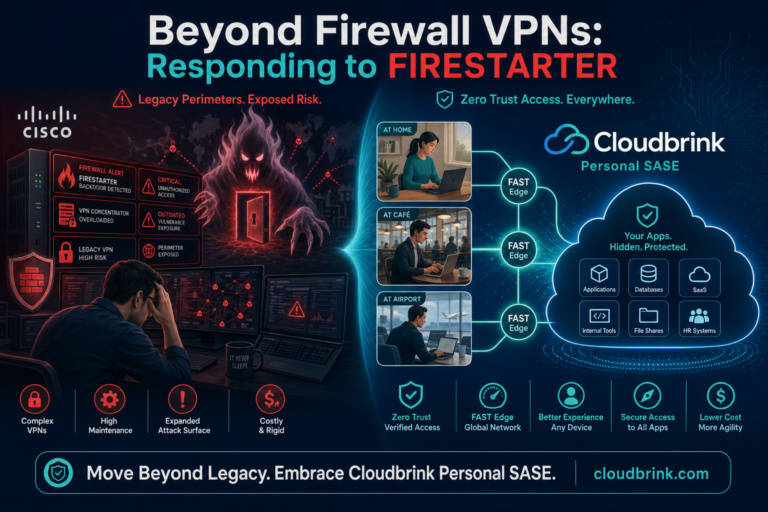
The immediate fix is clear: patch affected PAN-OS and Prisma Access versions, disable or harden authentication override cookie configurations, and follow Palo Alto’s mitigation guidance. But the bigger lesson is harder to ignore: when remote access depends on exposed firewall, VPN, or portal infrastructure, that infrastructure becomes a high-value target.
This is not an isolated pattern
CVE-2026-0257 follows other serious Palo Alto Networks security issues affecting internet-facing access and firewall functions.
In May 2026, Palo Alto Networks warned that a suspected state-linked threat cluster targeted CVE-2026-0300, a critical PAN-OS buffer overflow vulnerability in the User-ID Authentication Portal service that could allow arbitrary code execution on PA-Series and VM-Series firewalls. (Cybersecurity Dive)
In 2024, CVE-2024-3400 affected the GlobalProtect feature of PAN-OS and could allow unauthenticated attackers to execute arbitrary code with root privileges on affected firewalls in certain configurations. CISA also issued guidance for that vulnerability.
Other Palo Alto-related issues, including CVE-2024-0012, CVE-2024-9474, and CVE-2025-0108, have also been reported as part of exploit activity or exploit chains involving PAN-OS management or firewall components. (AppCheck)
The point is not that Palo Alto Networks is alone. The point is that edge security infrastructure is now a primary attack surface. Firewalls, VPN gateways, portals, concentrators, and management interfaces are attractive because they sit between attackers and the internal network. When they fail, the blast radius can be severe.
Why Cloudbrink changes the risk equation
Cloudbrink does not simply replace one access box with another. It changes where trust is established and how access is delivered.
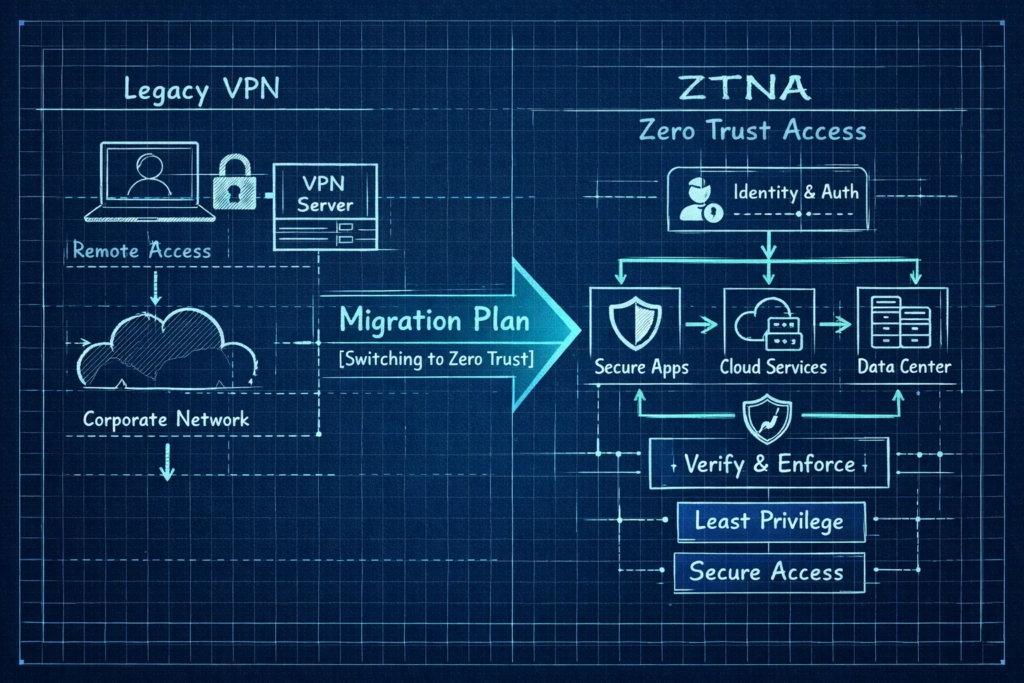
With Cloudbrink, users authenticate through the Brink App, policies are enforced based on identity and device posture, and access to private applications is brokered through software-defined connectivity rather than exposed inbound access infrastructure. The platform is designed to support private applications across data centers and cloud VPCs using Cloudbrink connectors that initiate outbound connectivity to Cloudbrink edge infrastructure.
That matters because attackers cannot exploit what they cannot easily find or directly reach.
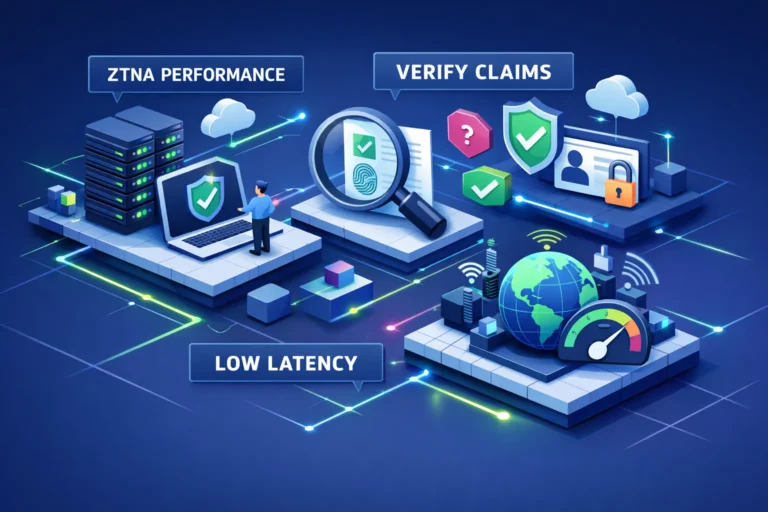
The benefits are not only security-related. Cloudbrink’s FAST Edges are designed to sit close to users, delivering low-latency access without forcing traffic through distant gateways. Cloudbrink documentation describes FAST Edges as dynamically deployed, software-defined edges that can deliver ultra-low latency and high per-user throughput without hardware dependency.
A Fortune 100 developer group reduced large software artifact transfer times by more than 30x compared with VPN and eliminated roughly 300ms of latency for some developers. A national insurance company moved away from Fortinet and Cisco VPNs after evaluating alternatives including Palo Alto Networks, Zscaler, and Netskope; it deployed Cloudbrink to 300 employees on Day 1 and more than 600 by the end of the first week, while remote connectivity support tickets “pretty much disappeared.”
Patching matters. Reducing exposure matters more.
Most organizations already know they need to patch faster. The harder question is whether they should continue relying on architectures that require critical access infrastructure to remain visible, reachable, and constantly defended.
Traditional remote access models often force IT teams into a cycle of emergency advisories, urgent change windows, compensating controls, user disruption, and forensic reviews. That is not a strategy. It is a treadmill.
Cloudbrink™ helps organizations reduce that dependency by moving secure access away from exposed legacy VPN-style entry points and toward Personal SASE: a user-centric, software-only architecture built around zero trust, performance, and operational simplicity.
Cloudbrink’s model uses mutual TLS 1.3, frequently rotated certificates, dynamic application paths, Dark-Cloud secure access, and SDP-aligned design to improve security posture and reduce attack surface. Its Personal SASE service combines high-performance ZTNA, personal SD-WAN, the Brink App, FAST Edges, connectors, and unified policy in a 100% software-only service.
The 3 S’s: Simplicity, Security, and Speed
The Palo Alto Networks CVE-2026-0257 issue is a reminder that secure access strategy should be measured by more than firewall features.
Simplicity: Cloudbrink is software-only, centrally managed, and designed to avoid the appliance sprawl, gateway planning, and bandwidth licensing complexity common in legacy remote access environments.
Security: Cloudbrink uses zero-trust access controls, device posture assessment, mTLS 1.3, frequent certificate rotation, and Dark-Cloud secure access to reduce exposure and enforce access dynamically.
Speed: Cloudbrink’s FAST Edge architecture and Brink Protocol are designed to overcome packet loss, latency, and last-mile network problems so users get a LAN-like experience wherever they work.
Conclusion:
Do not just patch the edge. Rethink it.
Security teams using Palo Alto Networks should patch CVE-2026-0257 immediately and review GlobalProtect configurations carefully. But this latest issue should also trigger a broader architectural review.
How much of your business depends on exposed VPN, firewall, or portal infrastructure? How often are your teams forced into emergency remediation? How much risk remains even after the latest patch?
Cloudbrink helps organizations modernize secure access by reducing reliance on exposed access infrastructure, improving user experience, and simplifying operations. It gives enterprises a practical path away from the patch-and-pray cycle toward a Personal SASE model built for today’s hybrid workforce.
The best attack surface is the one attackers cannot see.